He Used ChatGPT to Build a Cancer Vaccine for His Dog
Key insights
- AI did the research homework, not the science. Conyngham used ChatGPT to prepare quickly enough to earn the trust of leading scientists. The breakthrough came from combining AI speed with domain expertise and lab infrastructure.
- At roughly $3,000, a personalized cancer vaccine challenges the assumption that cutting-edge medicine must cost millions. If this scales, it disrupts how oncology treatments are priced.
- Dogs get many of the same cancers as humans, and veterinary medicine has fewer regulatory barriers. This makes it a natural testing ground for personalized mRNA vaccines before human clinical trials.
- The hardest part wasn't the AI analysis. It was navigating ethics approval. Regulation, not technology, is the real bottleneck for personalized medicine.
This is an AI-generated summary. The source video may include demos, visuals and additional context.
In Brief
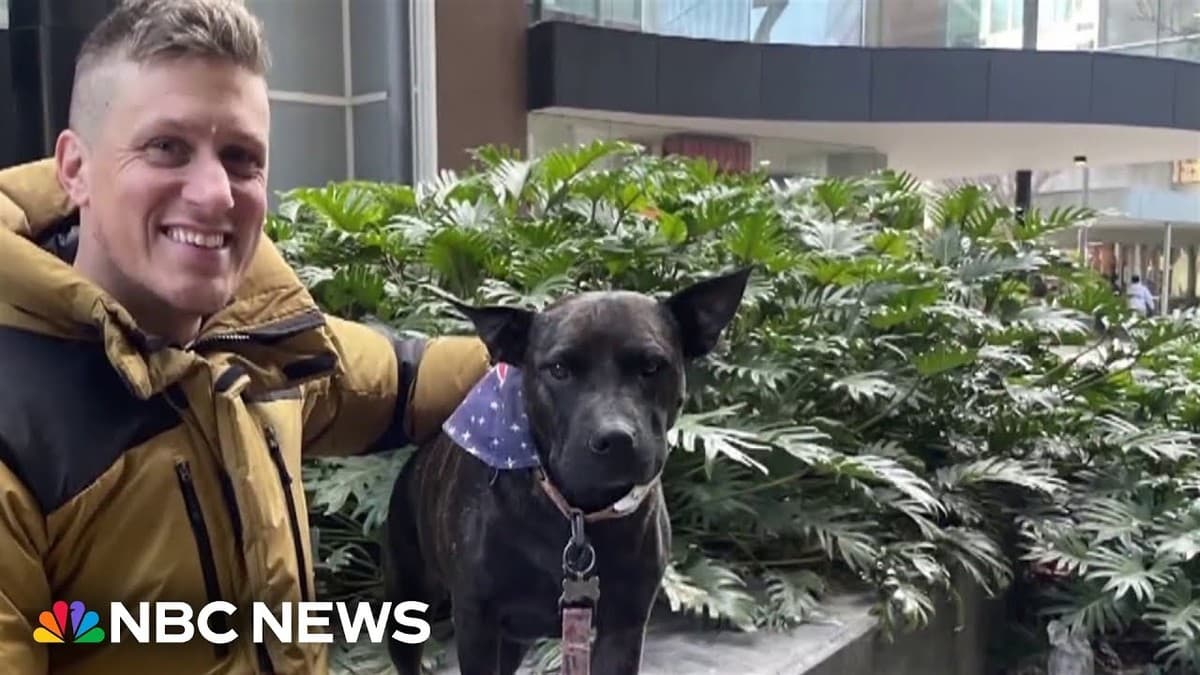
When Australian tech entrepreneur Paul Conyngham learned his dog Rosie had terminal cancer, traditional treatment was no longer an option. She had been misdiagnosed for 11 months, and by the time the correct diagnosis came, the cancer was too advanced for standard care. Conyngham turned to the tool he knew best: AI. Using ChatGPT for research strategy and AlphaFold (an AI from Google DeepMind that predicts how proteins fold in 3D) to identify vaccine targets, he worked with scientists at the University of New South Wales (UNSW) to sequence Rosie's DNA and produce a personalized mRNA vaccine. The vaccine was administered in December 2025. Within three weeks, results were visible. The tumor shrank by roughly 75% within a month.
Related reading:
How he did it
Conyngham's background is in machine learning. When Rosie's prognosis came back, his first instinct was to apply his professional skills to the problem. "My skill set is AI, so I decided to apply that to the problem," he told NBC News.
The process involved three main steps:
- DNA sequencing: Scientists at UNSW read the order of genetic building blocks in Rosie's healthy cells and compared them to her tumor cells. This identified the mutations driving her cancer.
- Target identification: Conyngham used AlphaFold to analyze how the proteins produced by those mutations fold in 3D. This helped identify which proteins were good targets for the immune system to attack.
- mRNA vaccine production: An mRNA vaccine is a set of instructions that teaches cells to produce a specific protein. Once that protein appears, the immune system recognizes it as a threat and attacks it. The same technology was used in the COVID-19 vaccines.
The vaccine produced for Rosie was one of the first personalized cancer vaccines ever developed for a dog.
Convincing scientists and navigating bureaucracy
Before any lab work could begin, Conyngham had to convince researchers to take him seriously. The scientists he approached were, in his words, "the leading people in their field" in Australia. He earned their attention by doing the homework first. He arrived at every conversation with detailed evidence and analysis already prepared, which showed he understood the science well enough to collaborate.
Getting the science right was only part of the challenge. In Australia, you cannot simply produce and administer a new drug. You need what is called an ethics approval, a formal review by an independent board before any medical experiment on animals or humans can proceed. Conyngham and his collaborators ran the vaccine development and the ethics approval in parallel to avoid losing time. With cancer, every week matters.
The results
The vaccine was administered in December 2025. Conyngham described being extremely nervous. Nothing like this had been tried before for a dog. About three weeks after the vaccination, he started to see results. The tumor shrank by roughly 75% within the first month.
Rosie appeared at the end of the NBC News interview, sleeping and wearing a NASA bandanna, very much alive.
Conyngham also praised Rosie's veterinarian, who supported the process throughout and who he called one of the unsung heroes of the story.
What comes next
The story sparked immediate interest from people with sick loved ones who wanted to know if they could do the same. Conyngham acknowledged that oncologists and sequencing companies have already been flooded with requests. He is now working on a company to help make this process accessible to others.
The total cost of Rosie's personalized vaccine was approximately $3,000. That number will likely surprise anyone who has priced cancer treatment. Personalized medicine has historically been associated with experimental, million-dollar therapies available only in clinical trials. A $3,000 mRNA vaccine built with AI tools and university lab access is a very different picture.
Whether this approach can scale, pass regulatory review, and eventually apply to humans is still an open question. But the fact that it worked once, for one dog, in less than a year, is significant.
Glossary
| Term | Definition |
|---|---|
| mRNA vaccine | A vaccine that gives cells instructions to produce a specific protein. The immune system learns to recognize that protein as a threat and attacks it. Used in COVID-19 vaccines. |
| Personalized cancer vaccine | A vaccine designed for one specific patient's unique tumor, based on their own DNA. Unlike standard vaccines, it targets the exact mutations found in that individual's cancer. |
| DNA sequencing | Reading the order of building blocks in DNA. By comparing healthy DNA to tumor DNA, scientists can find the mutations that are causing cancer. |
| AlphaFold | An AI tool developed by Google DeepMind that predicts how proteins fold into 3D shapes. Used here to identify which mutated proteins were good targets for the immune system. |
| Ethics approval | Formal permission from an independent review board required before any medical experiment on animals or humans can proceed. In Australia this is a legal requirement. |
Sources and resources
Want to go deeper? Watch the full video on YouTube →