Meta and YouTube Lose Landmark Addiction Trial
Key insights
- The plaintiffs used a 'products liability' strategy, treating features like endless scrolling and likes as product defects rather than speech issues. This sidesteps the federal law (Section 230) that has historically shielded tech platforms from lawsuits over user-generated content.
- $6 million is a rounding error for Meta. The real threat is that this verdict becomes a template for 2,000+ pending lawsuits. If the legal theory holds, the combined financial and operational pressure could force platform redesigns no regulator has managed to compel.
- Congress has spent years calling for social media regulation without passing meaningful federal law. Courts are now filling that gap through individual trials, a piecemeal process that may ultimately push the issue to the Supreme Court.
This is an AI-generated summary. The source video may include demos, visuals and additional context.
In Brief
A jury in Los Angeles found Meta and YouTube liable on all charges in a landmark social media addiction trial, awarding $3 million in compensatory damages (money to cover actual harm) to the plaintiff, a 20-year-old woman known publicly only by her initials, KGM, from Chico, California. Meta was assigned 70% of that liability, YouTube the remaining 30%. On top of compensatory damages, the jury later added $3 million in punitive damages (extra money meant to punish bad behavior), bringing the total to $6 million.
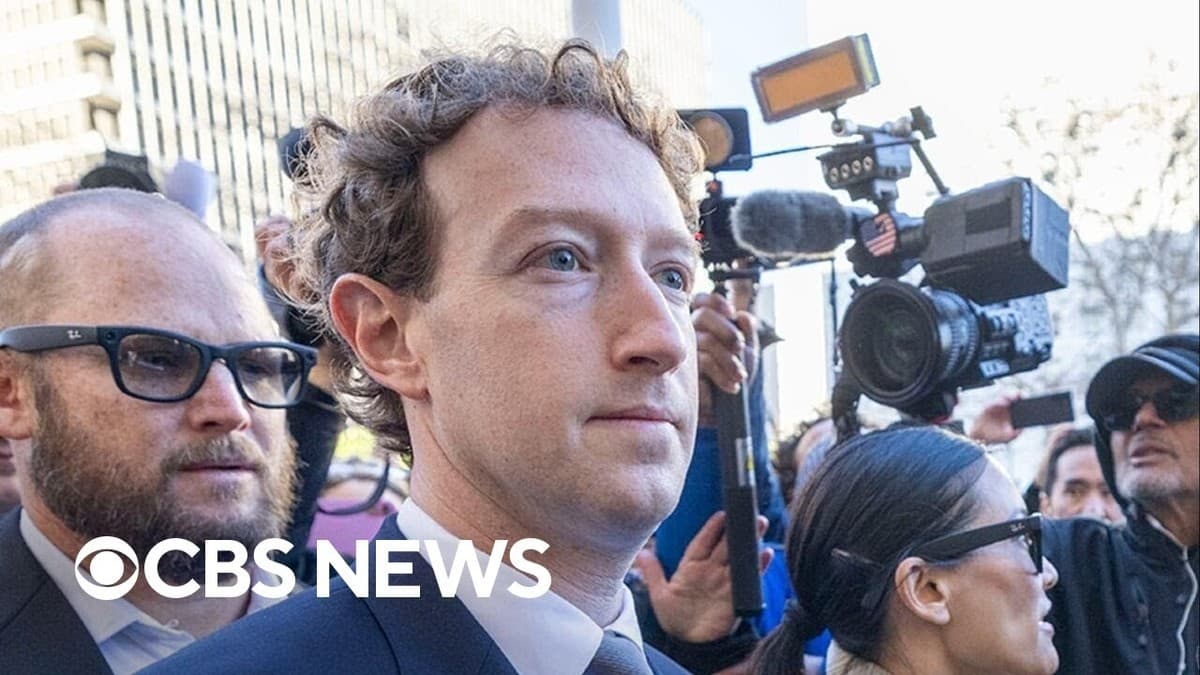
The six-week trial featured high-profile witnesses, including Meta CEO Mark Zuckerberg and Instagram head Adam Mosseri. Kaley started using YouTube at age six and Instagram at 11. By the time she was 10, she was struggling with depression, isolation, and self-harm. The jury deliberated for eight days before reaching its verdict.
The Los Angeles verdict came just one day after a separate jury in New Mexico found Meta liable for child sexual exploitation on its platforms, ordering the company to pay $375 million in that case. Together, these two verdicts could set precedent for more than 2,000 pending lawsuits against social media companies across the United States.
Related reading:
The legal strategy: treating apps like faulty products
The key to understanding this case is a legal concept called products liability: a company is responsible for harm caused by the product it sells, just like a car maker is responsible if faulty brakes injure someone. Plaintiffs argued that features like endless scrolling, likes, follower counts, and photo filters were not neutral tools. They were defects built into the product, designed to create addiction.
Legal contributor Caroline Polisi from CBS News compared it directly to the big tobacco lawsuits, cases where tobacco companies were eventually held accountable for designing a product that hooks users and harms their health. The argument is the same: these platforms knew their products were addictive, and they kept using those features anyway.
Internal company memos (documents written inside Meta that became public during the trial) showed that the company wanted to increase the amount of time young people spent on Instagram and Facebook. The defense argued the platforms were never designed to harm users. After eight days of deliberation, the jury sided with the plaintiff.
This approach also matters legally because it bypasses Section 230, a US law that normally protects tech platforms from being sued over content their users post. Arguing that the design of the product caused harm, not any specific post, is a different legal theory that the law doesn't clearly protect.
What happens next
Both Meta and YouTube are expected to appeal. Appeals mean the verdicts won't immediately force any changes to the platforms, and the legal process could take years to resolve.
The bigger picture is the scale of what's coming. More than 2,000 similar lawsuits are pending across the country. A major federal case in Oakland is expected to go to trial in June 2026. It uses a process called multi-district litigation (MDL), where thousands of similar lawsuits from different states get bundled into one court for efficiency. That case involves not just Meta and Google, but also TikTok and Snap (the company behind Snapchat).
Legal experts speaking to CBS News said the combined weight of these cases will likely end up at the Supreme Court, the highest court in the US. Any real, lasting changes to how these apps work will probably require a ruling at that level, or Congress stepping in with federal legislation, something it has so far failed to do.
A shift in accountability
For years, the default response to concerns about children and social media has been: that's a job for parents. Parental controls, screen time limits, family rules. The problem, as CBS News senior correspondent Jo Ling Kent put it, is that these products were designed to be difficult to put down. Parents are fighting those design choices largely alone.
This verdict is a signal that responsibility is beginning to shift. Average daily screen time for children exceeds seven hours. Jonathan Haidt, psychology professor at NYU Stern (New York University's business school) and author of The Anxious Generation, has written extensively about how smartphones and social media are reshaping adolescent mental health. His research has been cited in advocacy, legislation, and now courtrooms.
Whether $6 million moves the needle at a company the size of Meta is doubtful. It is a rounding error in their quarterly revenue. But the precedent being built, case by case, may prove harder to absorb.
Glossary
| Term | Definition |
|---|---|
| Products liability | A legal concept where the company that made a product is responsible for harm it causes. Think of suing a car maker for faulty brakes. |
| Compensatory damages | Money a court awards to cover the actual harm someone suffered: medical bills, therapy costs, emotional distress |
| Punitive damages | Extra money on top of compensatory damages, meant to punish a company for especially bad behavior and deter others |
| Section 230 | A US law that normally protects tech platforms from lawsuits over content their users post. These cases argue it shouldn't apply to addictive product design |
| Multi-district litigation (MDL) | When thousands of similar lawsuits from different states get bundled into one court for efficiency |
Sources and resources
Want to go deeper? Watch the full video on YouTube →