Sweden's 46 Unicorns: Hype or Blueprint?
Key insights
- Sweden's unicorn density comes from structural advantages like free education and early digital infrastructure, not just cultural mythology
- The founder factory effect creates a self-reinforcing cycle, but also concentrates risk in a small ecosystem
- Klarna's 60% share price drop and Northvolt's bankruptcy show that unicorn counts alone do not measure ecosystem health
- Several interviewees are invested parties, making independent verification essential before drawing conclusions
This is an AI-generated summary. The source video may include demos, visuals and additional context.
In Brief
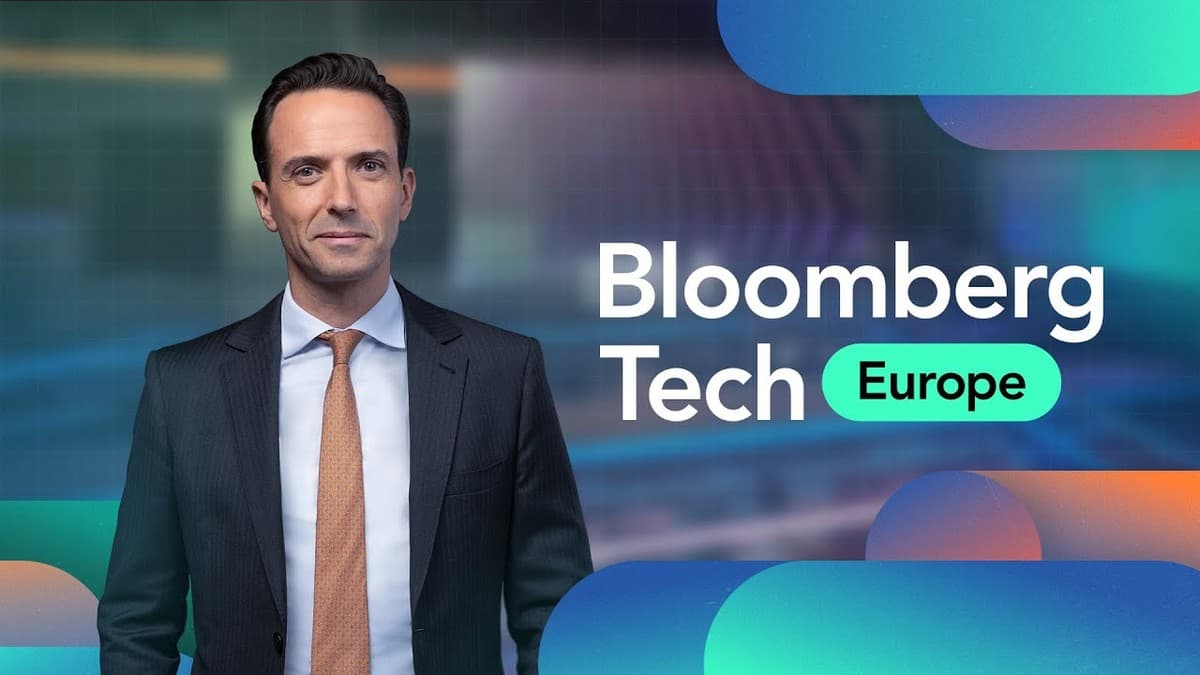
Bloomberg Technology traveled to Stockholm to investigate why Sweden, a country of just 10 million people, has produced 46 unicorn startups worth over $1 billion each. Host Tom Mackenzie interviews founders and investors including Anton Osika of Lovable, Isabel Keulen of SSE Business Lab, Tatiana Shalalvand of Kinnevik, and Max Junestrand of Legora. The episode makes a strong case for Sweden as "Silicon Valhalla," but also reveals cracks in the narrative that deserve closer examination.
Related reading:
The case for Silicon Valhalla
The numbers are striking. According to Business Sweden, Sweden has produced 46 unicorns from a population of just 10 million, making it the most prolific unicorn factory per capita in Europe. The country accounts for only 3% of European GDP yet punches far above its weight in tech, with over 2,200 startups in the pipeline.
The episode points to a self-reinforcing cycle that Bloomberg calls the "founder factory effect." When employees at successful companies leave to start their own ventures, they bring expertise, networks, and ambition with them. Klarna alumni have spawned 74 tech companies. Spotify alumni account for another 66. These second-generation founders then mentor the next wave, creating what Keulen describes as a concentration of builders who are "all helping each other out".
Structural advantages, not just culture
Kinnevik's Tatiana Shalalvand argues that Sweden's success is "not an accident" but rather the result of deliberate structural choices. Three factors stand out.
First, Sweden invested early in digital infrastructure, rolling out computers in schools during the 1990s and 2000s. Legora CEO Max Junestrand credits this directly: he got his own laptop in elementary school and started programming early. Second, free higher education produces engineering talent without the debt burden that holds back founders in other countries. Third, Sweden's small domestic market forces companies to think globally from day one. There is no option to grow comfortably at home before going international.
The design DNA
Creandum partner Fredrik Cassel adds another dimension. Swedish companies have a tradition of user-centered design inherited from brands like IKEA and Volvo. This "Steve Jobs approach," as Mackenzie puts it, translates well to software. Spotify, Lovable, and Klarna all built their reputations on products that prioritize simplicity and accessibility over technical complexity.
Lovable is a recent example. The AI coding platform, known as a "vibe coding" tool that lets anyone build apps by describing what they want in plain language, has hit $400 million in annual recurring revenue. CEO Anton Osika argues that the density of talent in Stockholm and the culture of long-term thinking are why Lovable chose to keep its headquarters there instead of moving to Silicon Valley.
Cracks in the narrative
The episode does not shy away from Sweden's setbacks, though they get far less airtime than the success stories.
Klarna's $5 billion IPO in New York was initially celebrated as a Swedish triumph. Six months later, the company's shares had fallen by 60% on profitability concerns. Northvolt, once Europe's biggest hope for EV battery production, filed for bankruptcy. These are not minor footnotes. They show that unicorn status alone does not guarantee long-term success.
There is also the question of capital flight. Keulen acknowledges that many Swedish startups register in Delaware from day one because it "signals ambition" and improves their chances of raising capital. Junestrand's own company, Legora, has expanded aggressively into the US and UK because the B2B talent pool they need "doesn't exist" in Sweden. When the most successful companies build their sales teams abroad and list in the US, the benefits to the Swedish ecosystem become harder to measure.
Junestrand also offers the most contrarian view in the episode. He argues there is not a lack of capital, but rather "a lack of very ambitious founders deserving of that capital". Not every Swedish startup idea is fundable, he suggests, and easy access to capital does not guarantee quality.
How to interpret these claims
The Bloomberg episode is well-produced and features compelling interviews. But several factors warrant caution before accepting "Silicon Valhalla" as a settled conclusion.
Survivorship bias
Every person interviewed in the episode is either a successful founder or an investor with a financial stake in Sweden's tech ecosystem. Failed founders, departed talent, and struggling startups are absent from the conversation. This is common in business media, but it means the picture is incomplete by design.
Self-reported data
The statistics come from invested parties. Business Sweden is a government trade organization whose mandate is to promote Swedish business abroad. The unicorn count, the 2,200-startup pipeline, and the founder factory numbers all originate from sources with an interest in making Sweden look good. Independent academic research would strengthen the case considerably.
Structure versus culture
The episode oscillates between structural explanations (free education, digital infrastructure, small market) and cultural ones (long-term thinking, lack of respect for authority, collaborative spirit). The structural factors are replicable. Other countries can invest in digital infrastructure and reduce education costs. The cultural factors are harder to export and harder to verify. When Junestrand attributes part of Sweden's success to "how hard can it be?" as a national attitude, that is compelling storytelling but difficult to measure or replicate.
What stronger evidence would look like
A more complete picture would include failure rates alongside unicorn counts, tracking how many of the 2,200 pipeline startups survive past year three. It would compare Sweden's outcomes to similar small economies like Denmark, the Netherlands, or Israel. And it would measure whether the value created by Swedish unicorns stays in Sweden or migrates to US investors and markets through Delaware incorporation and US-based IPOs.
Practical implications
For founders outside Sweden
The replicable lessons are the structural ones. Building globally from day one, investing in design and user experience, and fostering alumni networks between startups are strategies that work regardless of geography. The cultural mythology is interesting but not actionable.
For policymakers
Sweden's early investment in digital literacy and free education created a generation of technically capable founders. Countries looking to build their own tech ecosystems should focus on these long-term infrastructure bets rather than trying to replicate a specific culture.
For investors
Unicorn counts are a popular but incomplete metric. Klarna's post-IPO performance and Northvolt's bankruptcy suggest that evaluating the durability of companies matters more than counting how many crossed the $1 billion threshold.
Glossary
| Term | Definition |
|---|---|
| Unicorn | A startup valued at $1 billion or more. The term reflects how rare such companies used to be. |
| Annual recurring revenue (ARR) | The yearly income a company expects from subscriptions. A key metric for software companies. |
| Vibe coding | Building apps by describing what you want in plain language, letting AI write the code. |
| Founder factory effect | When employees from successful startups leave to start their own companies, creating a cycle of new ventures. |
| Venture capital | Investment money given to early-stage startups in exchange for ownership. High risk, potentially high reward. |
| IPO | Initial public offering. When a private company first sells shares on a stock exchange. |
| B2B | Business-to-business. Companies that sell to other companies rather than to individual consumers. |
| Silicon Valhalla | Nickname for Sweden's tech ecosystem, combining Silicon Valley with Valhalla from Norse mythology. |
Sources and resources
- Bloomberg Technology — How Sweden Became a Tech Powerhouse | Bloomberg Tech: Europe 3/13/2026 (YouTube)
- Lovable — AI coding platform
- Legora — Legal AI startup
- Kinnevik — Swedish investment firm
- Creandum — Swedish venture capital firm
- SSE Business Lab — Stockholm School of Economics startup incubator
- Business Sweden — Government trade and invest organization
Want to go deeper? Watch the full video on YouTube →