AI Is Breaking the Internet, and Photonics Is the Fix
Key insights
- Copper hit a physics wall, not an engineering one. AI didn't break copper by design; it simply outgrew a 40-year-old bandwidth ceiling that no amount of engineering can fix.
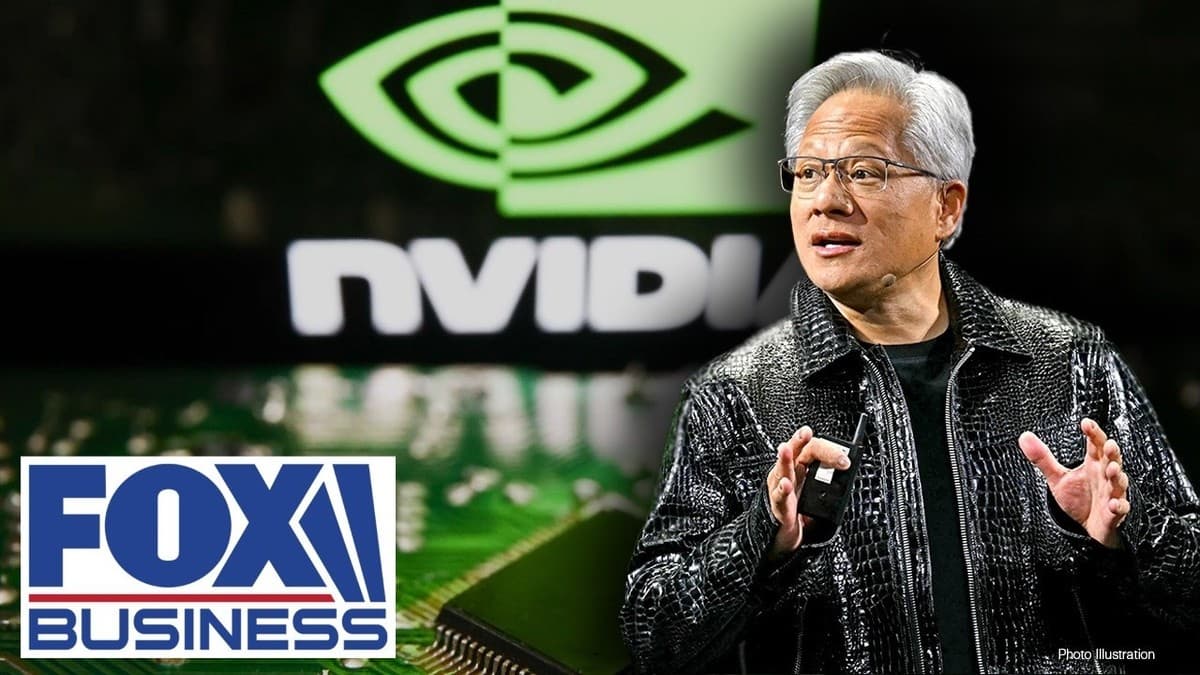
- NVIDIA is vertically integrating its supply chain. Jensen Huang is investing in photonics companies to ensure a missing $10 part never blocks a $1 trillion sales target.
- Space data centers make photonics non-negotiable. 10x lighter than copper and generating zero heat, it's the only viable technology for orbital infrastructure.
- The AI buildout has a hidden supply chain. Optical components are as critical as Graphics Processing Units (GPUs), yet far less discussed and potentially undercapitalized.
This is an AI-generated summary. The source video may include demos, visuals and additional context.
In Brief
The internet's pipes are full. On Fox Business, deep tech analyst Stephen Sopko from HyperFRAME Research laid out a simple but urgent argument: AI's data appetite has grown faster than copper wires can handle, and the only way forward is photonics — a technology that moves information as pulses of light instead of electricity. The big data centers have already made the switch. Now NVIDIA and Jensen Huang are placing serious bets on companies like Coherent Corp and MACOM to lock in the supply chain before a tiny missing component stalls a trillion-dollar business plan.
Related reading:
Copper ran out of road
For 40 years, copper wire has been how computers talk to each other. From the telegraph to the modern data center, copper has been the default: cheap to install, easy to work with, and good enough.
AI changed that calculation overnight.
This isn't a design flaw. It's a physics limit. Copper can only carry so much data at once, and the massive computing clusters that power AI models hit that ceiling. Sopko was blunt about it: "With AI, we ran out of bandwidth on copper."
The solution already existed. It just hadn't been needed at this scale. Fiber optics, the technology of sending data as light through glass cables, has been around for about 40 years. But it was always more expensive and more finicky than copper. As long as copper could handle the load, there was no business case to switch.
Now there is.
What photonics actually does
Photonics sounds exotic, but the concept is simple.
Your laptop moves data around as tiny electrical pulses: electrons zipping through copper wires. Photonics does the same thing with light: it converts electrical signals into light pulses, fires them down a glass fiber at the speed of light, and converts them back at the other end.
Light moves faster than electrons and can carry vastly more data in the same space. That's the entire case for photonics. No clever trick. Just physics working in its favor.
The big hyperscale data centers (the giant server farms run by Google, Microsoft, Amazon) started making this shift a few years ago. AI simply forced everyone else to catch up faster than planned.
NVIDIA's supply chain play
When host Charles Payne asked about Jensen Huang's recent investments in photonics companies, Sopko saw two clear motives.
The first is straightforward: protecting supply. Companies like Coherent Corp make the optical components that go inside data centers. NVIDIA needs those components to exist in large quantities and on reliable timelines.
The second motive is more strategic.
Jensen Huang has publicly talked about a $1 trillion sales target tied to AI infrastructure buildout. To hit that number, AI factories (data centers packed with NVIDIA GPUs) need to go up fast and keep running. A billion-dollar data center sitting idle because a small optical transceiver (a component that converts electrical signals to light) didn't ship on time is a nightmare scenario.
So NVIDIA is scanning every segment of the supply chain around it and putting money into anything that looks undercapitalized. The goal: make sure a $10 part never blocks a $1 trillion plan.
The space angle that changes everything
The conversation took a surprising turn when Payne mentioned the space economy.
Photonics has always been a "nice to have" upgrade on Earth. In orbit, it becomes the only option.
"Photonics is about ten times lighter [than copper]." — Stephen Sopko
Every kilogram launched into space costs thousands of dollars in rocket fuel. Copper is heavy. Photonics infrastructure, by contrast, is roughly ten times lighter, a difference that goes from "nice" to "essential" the moment you need to launch something on a rocket.
There's a second advantage that matters even more in space: heat. Copper wiring generates significant heat as electricity flows through it. Data centers on Earth deal with this using massive cooling systems. In space, heat management is far harder.
"With photonics you don't generate any heat." — Stephen Sopko
No heat, ten times lighter, virtually unlimited bandwidth. For space-based data centers, photonics isn't a preference. It's the only engineering answer that works.
Glossary
| Term | Definition |
|---|---|
| Photonics | Technology that moves data as light pulses instead of electrical signals — faster, lighter, and cooler than copper wiring |
| Fiber optics | Thin glass cables that carry data as light — the physical infrastructure that photonics runs on |
| Optical transceiver | A device that converts electrical signals to light and back again — the bridge between a computer chip and a fiber optic cable |
| Copper interconnect | Traditional copper cables used to move data between chips and servers — the technology hitting its bandwidth limit with AI workloads |
| Hyperscale data center | A massive server facility run by companies like Google or Amazon, operating at a scale where photonics upgrades are measured in miles of fiber |
| Bandwidth | How much data a connection can carry at once — think of it as the width of a pipe. AI workloads are a fire hose; copper wiring is a garden hose |
Sources and resources
- Fox Business Clips — 'LIGHT IS THE ANSWER': Expert warns AI is BREAKING the internet (YouTube) — Original source video with Stephen Sopko and Charles Payne
- HyperFRAME Research — Stephen Sopko's deep tech research firm
- Coherent Corp — Photonics and optical components manufacturer mentioned in the segment
- MACOM — Semiconductor company focused on optical and photonic infrastructure
Want to go deeper? Watch the full video on YouTube →