Apple Opens Siri to Rival Chatbots in Major AI Pivot
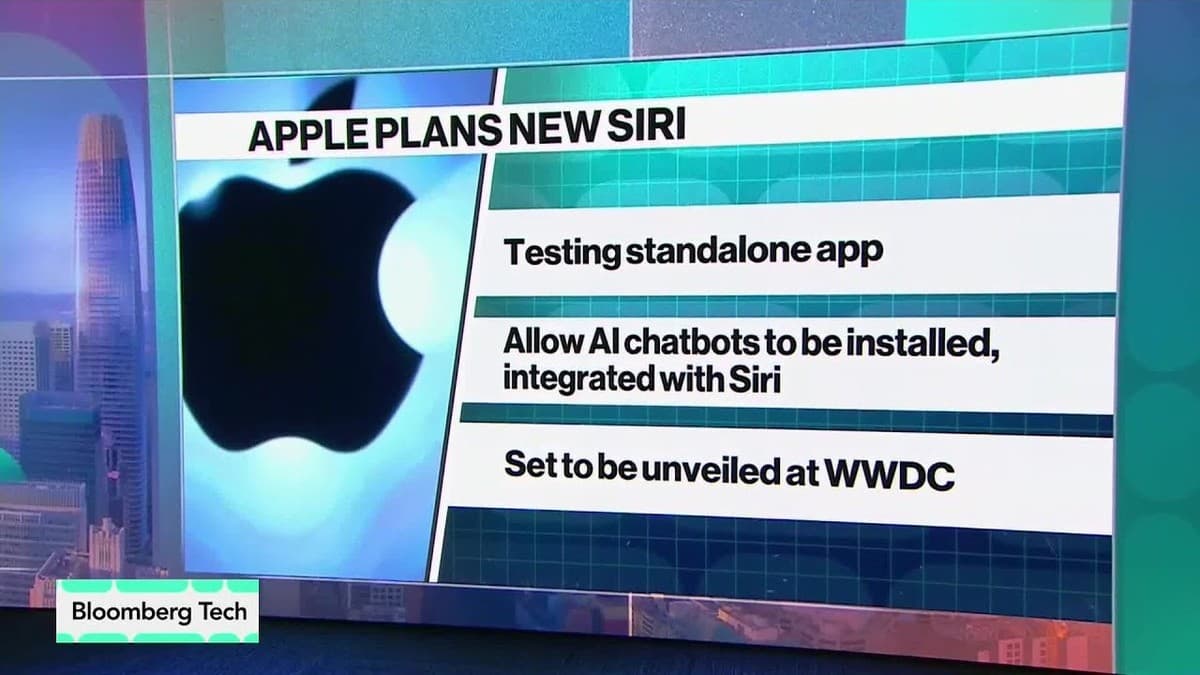
Key insights
- Apple is applying the App Store playbook to AI: instead of winning the chatbot race, it earns 30% from everyone who runs on iPhone. Apple does not need the best AI, just the most popular hardware platform.
- OpenAI has been poaching several dozen Apple hardware engineers every month for the past six months. Two former Apple hardware leaders now run OpenAI's hardware division. The talent war is as important as the model war.
- Apple is quietly rebuilding its underlying AI models using technology from Google's Gemini. That is a silent admission that its own models were not good enough, revealing how hard it is to compete in AI even for the world's most valuable company.
This is an AI-generated summary. The source video may include demos, visuals and additional context.
In Brief
Apple is making a significant shift in its AI strategy. Rather than competing head-to-head with ChatGPT or Google Gemini, the company is opening Siri to outside AI assistants, letting users access whichever chatbot they prefer directly from their iPhone. Bloomberg reporter Mark Gurman, who has been tracking Apple closely for years, broke the story and discussed the details with Bloomberg Technology host Ed Ludlow.
The move is part of a broader strategy that includes a new App Store section for AI assistants, where Apple will take 30% of subscription revenue, the same cut it takes from apps and games. At the same time, Apple is dealing with a serious talent drain: OpenAI has been recruiting Apple's hardware engineers at an aggressive pace. And quietly, Apple has begun rebuilding its AI models using technology borrowed from Google's Gemini.
Related reading:
The App Store strategy, applied to AI
Apple is going chatbot-agnostic (supporting multiple AI assistants equally, rather than favoring one). The idea is that Apple does not have to build the winning chatbot. It just has to make sure the winning chatbot runs through an iPhone, and then take its share.
That means a new section of the App Store dedicated to AI assistants. When a user pays for a premium tier of ChatGPT, Gemini, or any other AI service through that section, Apple collects up to 30% of that subscription fee. The exact percentage may vary depending on what Apple negotiated with each provider.
As Gurman put it, Apple is "doubling down on hardware as a platform," reinforcing its services revenue while stepping back from the AI race. It is the same logic that made the original App Store a trillion-dollar business: Apple does not need to make every great app, only the phone those apps run on.
Apple is also working on first-party features (features built by Apple itself, not by outside developers), including a redesigned Siri app and an easier way to call up Siri from the keyboard. So it is not abandoning its own AI work, but it is no longer betting everything on it.
The Gemini admission
One of the quieter revelations in Gurman's reporting is that Apple is rebuilding its underlying AI models using technology from Gemini, Google's AI system. Apple has not made a public announcement about this. It is happening behind the scenes.
This is significant. Apple spent years and enormous resources building Apple Intelligence, its own suite of AI features. The fact that the company is now relying on a competitor's technology to power those models is an indirect acknowledgment that its own models were not competitive. Even for the world's most valuable company, training frontier AI models turns out to be genuinely difficult.
The talent drain
The other major story Gurman broke this week involves compensation. Apple is offering one-time cash bonuses and RSUs (Restricted Stock Units, shares granted to employees that vest over time, typically four years) to retain key engineers, particularly those on the iPhone product design team within the hardware engineering group.
The reason: OpenAI wants those engineers badly.
OpenAI is building hardware devices, and Apple's hardware engineers are some of the best in the world at building the kind of polished, high-quality physical products OpenAI wants to create. According to Gurman, OpenAI has been recruiting several dozen Apple engineers every month for the past six months. That is not casual poaching. That is a systematic effort to hollow out Apple's hardware capabilities.
And it is working at the leadership level too. Two of the people now running OpenAI's hardware division previously ran hardware at Apple. OpenAI is not just taking engineers. It is taking the people who built the iPhone.
What this means
Apple's strategy is becoming clearer: be the platform, not the product. Every major AI company, from OpenAI to Google to smaller startups, needs to be on iPhone to reach a billion-plus users. Apple is building the road they all have to drive on, and charging a toll.
The open question is whether this is enough. Apple's rivals are not just building better chatbots. They are building their own hardware too, and they are using Apple's own engineers to do it. The platform strategy works as long as Apple controls the device people reach for. If OpenAI ships hardware that competes directly with iPhone, the toll road disappears.
For now, Apple is doubling down on the bet that the iPhone stays the center of people's digital lives, even if Siri is no longer the AI doing the work inside it.
Glossary
| Term | Definition |
|---|---|
| Chatbot-agnostic | Supporting multiple AI assistants equally, without favoring one over another |
| RSU (Restricted Stock Unit) | Company shares given to employees that vest (become fully owned) over time, usually four years — used as a financial incentive to stay at the company |
| First-party features | Features built directly by the company that makes the device or platform, as opposed to third-party apps made by outside developers |
Sources and resources
Want to go deeper? Watch the full video on YouTube →