AI Writes the Code. Who Catches the Risks?
Key insights
- AI-generated code is dangerous not because it's obviously wrong, but because it looks correct. It compiles, passes tests, and hides vulnerabilities that only surface later
- Shift left (moving security checks earlier in the development process) has been a developer buzzword for years, but AI-generated code volume makes it a hard requirement: catching risks after the code is submitted for review is too slow and too expensive
- Security tools that help developers while they work get adopted. Tools that stop their work and force them through extra steps get bypassed. That is why security must be built into the workflow, not bolted on top.
This is an AI-generated summary. The source video may include demos, visuals and additional context.
In Brief
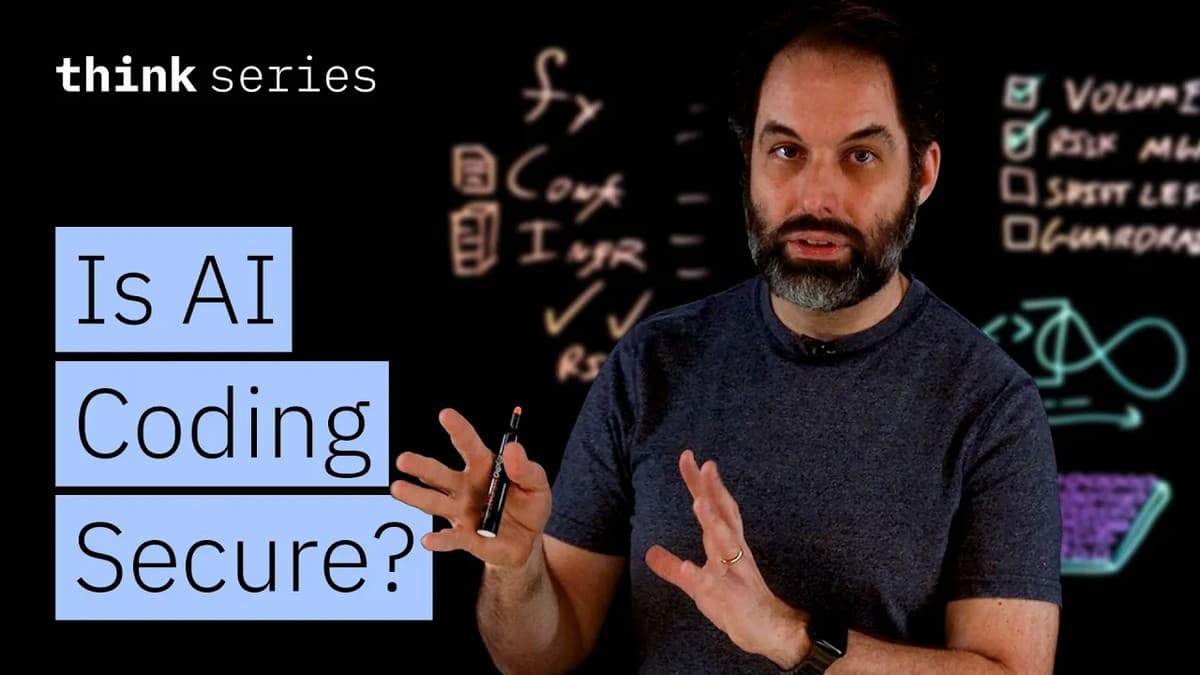
AI-assisted coding has permanently changed how software is built. Teams now generate more code faster than ever before, but also with less direct familiarity with what that code actually does. The problem is that traditional security tools were built for human-paced development. They check code after it is written, which is already too late when AI can produce entire functions in seconds. Patrick Nyeste from IBM explains how code risk intelligence addresses this by embedding security checks directly into the moments where code is created, reviewed, and released.
Related reading:
The problem with fast code
AI coding assistants are remarkably good at generating functions, configurations, and infrastructure definitions in seconds. That speed is genuinely useful. But it introduces a new kind of risk that traditional security tools are not equipped to handle.
Most AI-generated code looks correct. It compiles. It often passes basic automated tests. And that is precisely what makes it dangerous. Hidden risks quietly accumulate until they surface later as failed pull requests, production outages, or security escalations — by which point fixing them is slower, more expensive, and more disruptive than catching them early would have been.
AI-assisted development changes three things at once. More code gets written. Less of it is deeply understood. And iteration happens faster than review cycles can keep up with. Teams shift between writing logic, pasting AI-generated snippets, adding dependencies (pre-built code libraries the project relies on), and configuring infrastructure as code (managing servers and networks through code files), all in a single session. Security checks that happen after all of these steps, as they do in most teams today, are always playing catch-up.
What code risk intelligence does differently
The core idea behind code risk intelligence is simple: if risk is created while code is being written, that is when it needs to be caught. Not after the pull request. Not during a quarterly security audit. Right there, in the editor, while the developer still has full context on what they were trying to do.
A code risk intelligence system surfaces risky patterns, unsafe dependencies, misconfigured infrastructure settings, and insecure AI-generated code while offering clear, contextual remediation guidance in near real time. It does not just flag problems: it explains why they matter and suggests how to fix them, without breaking developer flow.
The difference from traditional security is timing. Traditional tools scan finished code and report problems after the fact. Code risk intelligence integrates with the developer's workflow and warns while the code is still being formed, when fixing something takes a few keystrokes instead of a full debugging session weeks later.
Shift left, for real this time
"Shift left" has been a buzzword in software development for years. It means moving security checks earlier in the development process — to the left on the timeline, closer to where code is written rather than after it is deployed. In practice, it has often meant adding more checklists and gates that developers find ways to route around.
The argument here is different. True shift left is not about pushing security responsibility onto developers. It is about giving them continuous awareness of the downstream impact of their decisions. Think of it as a security mirror that developers carry with them. When teams have foresight rather than surprise, accountability becomes natural, collaboration improves, and risk gets addressed before it piles up into problems that become increasingly expensive to fix.
That framing matters because adoption is the real variable. Developers adopt tools that help them move faster. They bypass tools that slow them down or feel like obstacles. A security layer designed as a mirror rather than a gate has a fundamentally different relationship with the people using it.
The three moments that matter
Code risk intelligence only works when it shows up where risk actually gets created. In today's AI-assisted development workflows, there are three moments that matter most:
The IDE (the editor where developers write code), when code is being created. This is where developers are writing logic, pasting AI suggestions, and configuring dependencies. Risk that gets caught here costs almost nothing to fix.
The pull request (a developer's formal request to merge their code into the shared codebase), when code is being reviewed. This is the last moment before code enters the shared codebase. Surfacing risks here is more expensive than catching them in the IDE, but still far cheaper than production.
The CI/CD pipeline, when code is being released. The automated system that builds, tests, and deploys code continuously. This is the last line of defense before code reaches users.
If a security tool is not present at all three of these moments, it simply does not fit the workflow where AI-generated code actually flows. Code risk intelligence is not trying to slow AI coding down — it is trying to make sure someone is watching while it runs.
Glossary
| Term | Definition |
|---|---|
| Shift left | Moving security checks earlier in the development process, to where code is written rather than after it is deployed |
| Technical debt | Problems in the code that pile up and become more expensive to fix over time, often because shortcuts were taken along the way |
| Code risk intelligence | Real-time analysis that surfaces security risks at the moment code is written, not after |
| CI/CD pipeline | An automated system that builds, tests, and deploys code continuously |
| Infrastructure as code | Defining servers, networks, and cloud resources through code files instead of manual configuration |
Sources and resources
- IBM Technology — Code Risk Intelligence: Securing AI Coding at Scale in Real Time (YouTube) — Original source video by Patrick Nyeste, IBM
- IBM AI Code Generation — IBM's resources on AI-assisted code generation
Want to go deeper? Watch the full video on YouTube →